Physical Address
304 North Cardinal St.
Dorchester Center, MA 02124
Physical Address
304 North Cardinal St.
Dorchester Center, MA 02124


Noticing changes in your hearing? Learn six early signs of hearing loss, when to book a hearing test and which symptoms need urgent attention.
Hearing loss often develops slowly. Conversations may begin to sound less clear, background noise may become more distracting, and you might find yourself raising the television volume without noticing. These changes are common with age, but they are worth paying attention to: some causes of hearing difficulty can be treated, and support is available for others.
At a glance: Regularly asking people to repeat themselves, struggling to follow conversation in noisy places, and turning up the TV are all reasons to consider a hearing check. Sudden or rapidly worsening hearing loss needs urgent medical assessment.
Not everyone experiences hearing difficulty in the same way. The NHS and World Health Organization highlight several everyday warning signs:
A partner, friend or relative may notice changes before you do. One sign alone does not establish a diagnosis, but recurring difficulties are a good reason to arrange an assessment.
Age-related hearing loss, also called presbycusis, typically develops gradually and often affects both ears. Changes in the inner ear and hearing pathways can make speech harder to understand, particularly against background noise. Long-term noise exposure, certain health conditions, some medicines and inherited factors may also contribute. The US National Institute on Deafness and Other Communication Disorders (NIDCD) explains these factors in more detail.
Importantly, not every change in hearing is age-related or permanent. Earwax build-up and ear infections can also affect hearing, sometimes in ways that can be treated. This is why it is better to have symptoms checked than to assume the cause.
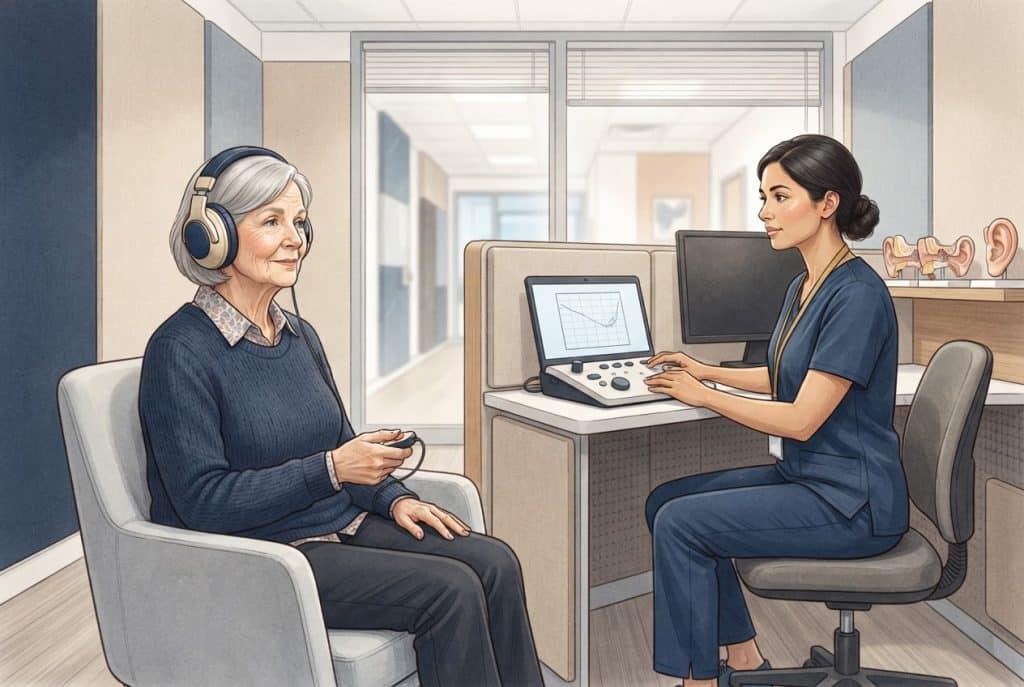
Consider an appointment if you regularly miss words in conversation, need a higher volume than other people, or notice that your hearing is gradually getting worse. A healthcare professional can examine your ears, look for possible causes and advise whether a hearing assessment with an audiologist is appropriate.
A professional assessment may include listening to tones at different pitches and, where appropriate, tests of speech understanding. Online hearing checks can be useful as a first prompt to seek help, but they do not replace a professional diagnosis.
Seek urgent medical advice if your hearing suddenly drops in one or both ears, worsens rapidly over days or weeks, or occurs with concerning symptoms such as ear pain or discharge. Sudden hearing loss can be time-sensitive. In the UK, contact an urgent GP service or NHS 111; elsewhere, seek prompt medical assessment through an appropriate urgent-care service. Do not wait for a routine hearing-aid appointment if hearing changes abruptly.
The right approach depends on the cause and degree of hearing loss. Treatable problems such as excess earwax or an infection may need medical management. For ongoing hearing loss, hearing aids and other assistive listening devices can make communication easier, but they do not restore normal hearing or suit every situation.
Some practical changes may help in the meantime:
If you are considering hearing aids, start with a clear understanding of your hearing needs. The most discreet or most expensive device is not automatically the best fit; comfort, appropriate sound support, ease of use and follow-up help all matter.
Age-related hearing loss is common, but difficulty hearing should not simply be dismissed as an unavoidable inconvenience. An assessment can help identify treatable causes and suitable support.
The age-related changes responsible for presbycusis are generally not reversible. However, hearing aids, communication strategies and assistive devices can help many people manage its effects.
If the cause of your hearing difficulty is uncertain, a professional assessment can help. In the United States, certain over-the-counter hearing aids are intended for adults with perceived mild to moderate hearing loss, but they are not appropriate for every symptom or degree of hearing difficulty. Seek medical advice promptly for sudden changes, pain, discharge or other concerning symptoms.
If conversations have become harder to follow, take the change seriously without jumping to conclusions. A hearing check can help establish what is happening and what options are appropriate. The earlier you understand the problem, the sooner you can make informed decisions about your hearing health.